


Centre County may not appear to be a stronghold of African American culture at first glance. But give the people of color in our region a reason to gather, and one very fine celebration ensues.
Juneteenth in State College was an all-day street party with music, food, crafts, poetry, and vendor booths providing plenty to entertain. The fact that it took place on June 20th supports the “time is an illusion” concept. The lateness is fitting: June 19th, 1865, was two and a half years after Abraham Lincoln’s January 1, 1863, Emancipation Proclamation at the end of the Civil War. The Texas Confederates were the last to comply with the federal order. News traveled slowly in those days, especially news that the slave owners didn’t want to hear. What is one day late in the grand scheme of things?
Our family from Miami was in town, and the Fraser Street festivities appealed to all.


But we didn’t stay all afternoon, as we thought a good way to commemorate Juneteenth would be to see the permanent exhibit at the Bellefonte Art Museum on the Underground Railroad and to visit Michael Pilato’s Bellefonte Inspiration mural. And it was a big plus that there was a car show going on in Bellefonte that day. Our youngest Florida family member, Cormac, is a hot-car enthusiast.


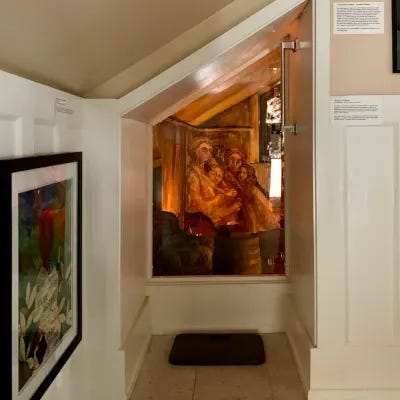
The BAM exhibit in the historic Linn House is small but mighty. In 1954, two secret rooms were discovered when the building passed from private ownership; the rooms purportedly had been used by slaves escaping from the South.
After the museum, we walked through streets crowded with cars and car enthusiasts to see the Michael Pilato “Inspiration Bellefonte” mural painted on the wall of the Waffle Shop on Perry Lane.
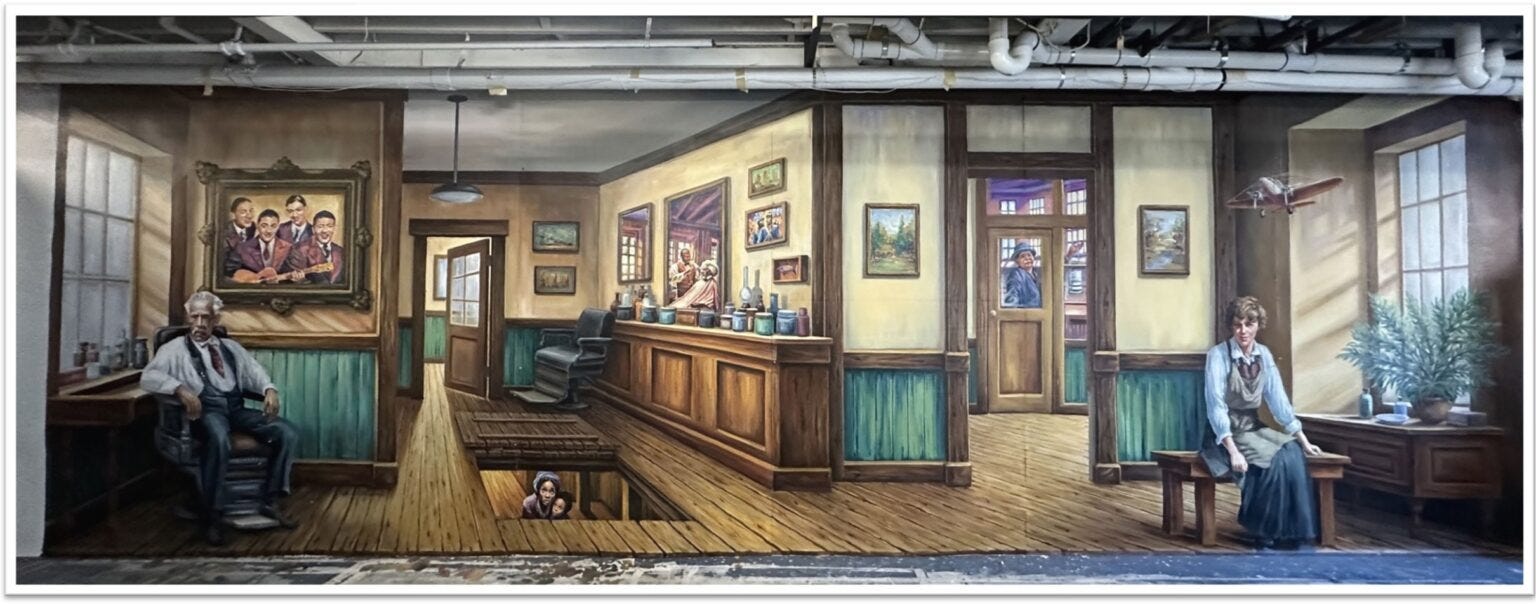
The mural honors the influence of African Americans in Bellefonte, with images of Walter H. Mills, who owned a barbershop in Bellefonte from 1871 to 1931, and cut Frederick Douglass’s hair while he was on his national speaking tour in 1872. The grandsons of Walter H. Mills formed the Mills Brothers vocal quartet and were famous from the early 1930s through the 1950s. The quartet was one of the first African American groups to be popular with a wide, multiracial audience, and some of their songs, like Glow Worm and Lazy River, are classics in the genre. Amelia Earhart is also featured on the mural for her travels in the area between 1928 and 1930.


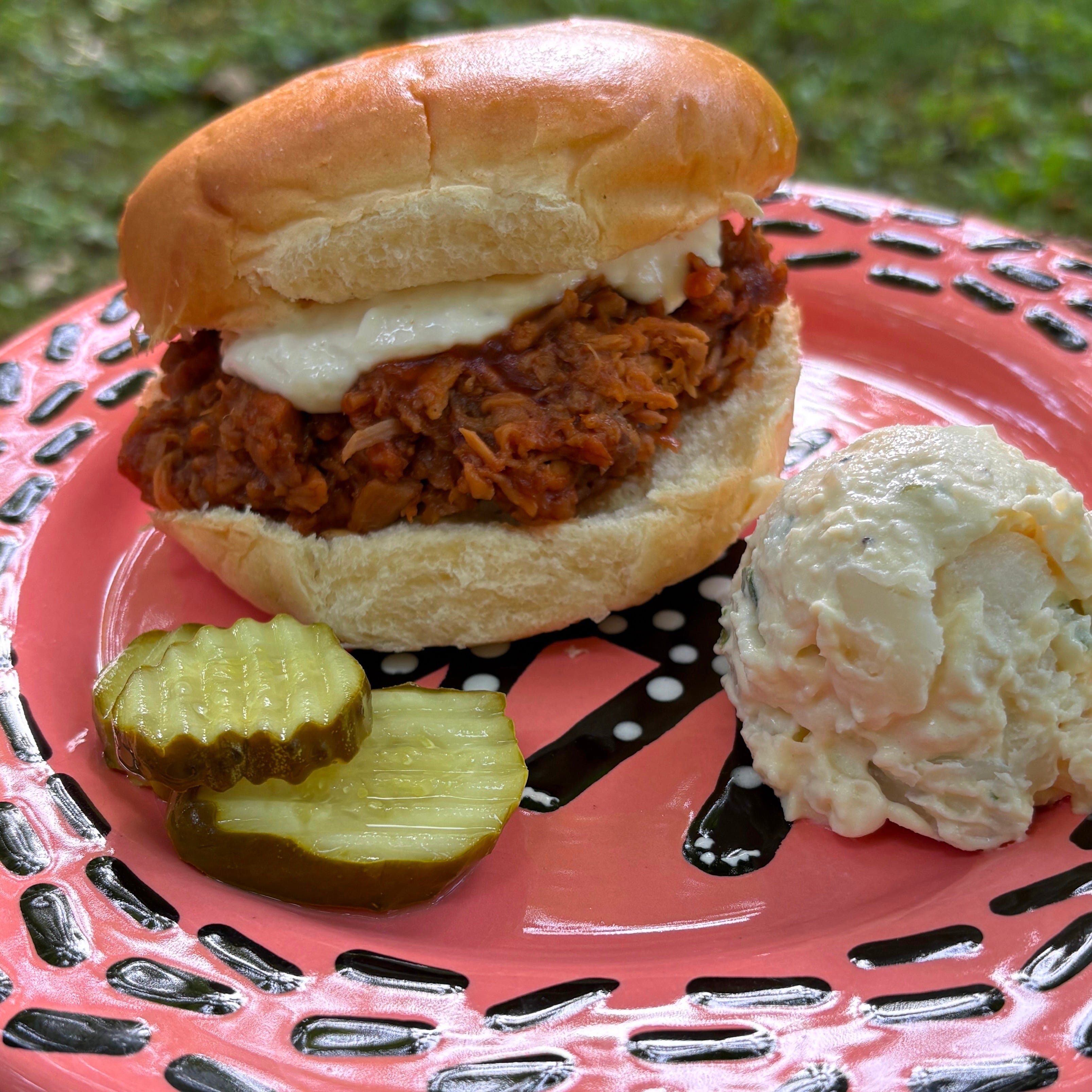
All that walking around made us hungry and thirsty, and we found lots of food concessions, including my absolute local favorite for pork barbecue, Scott’s Roasting. Some of us snacked on site, and I brought home some of their pulled pork to make sandwiches for dinner. Though African Americans can’t be credited as the creators of barbecue, they have popularized it in their own culture. And that is something to celebrate as well.
Father’s Day morning, the family launched out after a big breakfast, where we counted our many blessings over the 10 days we spent together. John made blueberry and non-blueberry pancakes; we had lox and bagels, scrambled egg sandwiches, and a rainbow of different fruits to complement our own colorful family.


I was reminded of my own father, Don Quinn, who was very fond of his African American neighbors when they moved into our West Oak Lane neighborhood back in the 1960s. Dad used to sing the Mills Brothers’ 1950 hit “Daddy’s Little Girl” to me when I was a baby. He also had enlightened views about race. I remember him telling my uncle, who lived up the street, that the country’s problems with race would end someday once enough Black people married White people. Then we would all be golden.
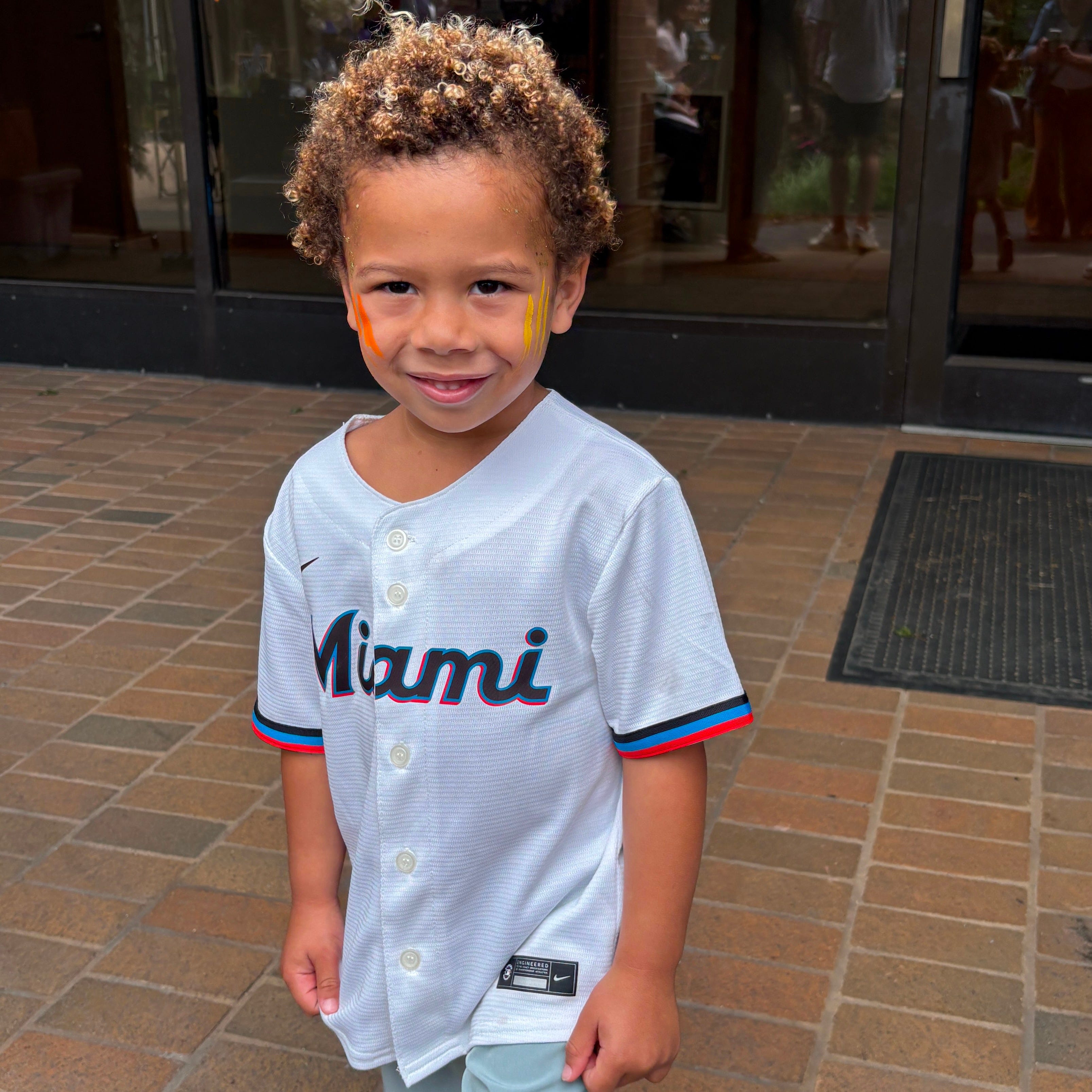
He would be very pleased to see our grandson Cormac, one of our golden boys.
Happy Father’s Day!